
Can Your Body Make More GLP-1 Naturally?
If you're on a GLP-1 medication—or thinking about one—there's a piece of the story that rarely comes up: your body already makes GLP-1 on its own. The drug isn't introducing something foreign. It's supplying, from the outside, a signal some of us have stopped making enough of on the inside.
Metabolic scientist Dr. Ben Bikman recently laid this out in one of his Metabolic Classroom lectures, and I found it genuinely useful for how I think about these medications with my clients. Here's the short version, plus what I think it means for you.
Your Gut Already Makes This Hormone
GLP-1 is released by cells in your small intestine after you eat. Among other things, it slows how fast your stomach empties, which lowers how much insulin a meal demands. It's less "insulin booster" and more "insulin sparer."
Here's the interesting part: in a small 1996 study, researchers gave lean women and women with obesity the same carbohydrate meal. The lean women had a strong GLP-1 response. The women with obesity had almost none. Same meal, very different internal signal.
Bikman's explanation—and this is where the research gets newer and more theoretical—points back to insulin itself. The cells that release GLP-1 carry insulin receptors, and there's emerging evidence that when insulin stays elevated for too long, those cells can become insulin resistant too, the same way muscle or liver cells do. Less sensitivity there means less GLP-1 released, which can mean faster digestion, bigger blood sugar swings, and more insulin demanded next time. It's a loop that can feed itself.
Why This Matters If You're On the Medication
If chronically high insulin is part of what dampens your own GLP-1 signal, then the medication isn't just handing you an external tool—it may be giving your body a break from the exact pattern that dampened the signal in the first place.
Bikman's point, and the one I want to underline for my clients, is this: the drug works best as a window, not a destination. While cravings for sugar and refined carbs are quieter, that's genuinely useful time—time to build meals around protein, fiber and whole foods, add some strength training, and let new habits become the default instead of the exception.
This tracks with something we already know from the trial data on these medications: cravings for sweet foods do improve in the first year, but by two years, they tend to drift back toward where they started for many people. And when people stop the medication, a lot of the weight tends to come back too. ( I go deeper on this in Can You Reduce Weight Regain After Stopping GLP-1 Medications? ).The usual read on that is "obesity requires lifelong medication." Bikman offers another one worth considering: if the eating pattern underneath never changed, then removing the drug just removes the only thing that was holding that pattern back.
Both interpretations are reasonable. I'm not here to tell you which one is right for you—that's a conversation for you and your prescriber. But I find the second one more useful, because it gives you something to actually do with the time you're on the medication, rather than just waiting to see what happens when you come off it.
What I'd Take From This
You don't need to fully understand insulin receptors and L-cells to use this. A few practical takeaways:
If you're on a GLP-1 medication, treat the lower-craving period as a working window, not a finish line. Use it to build the habits you actually want to carry forward.
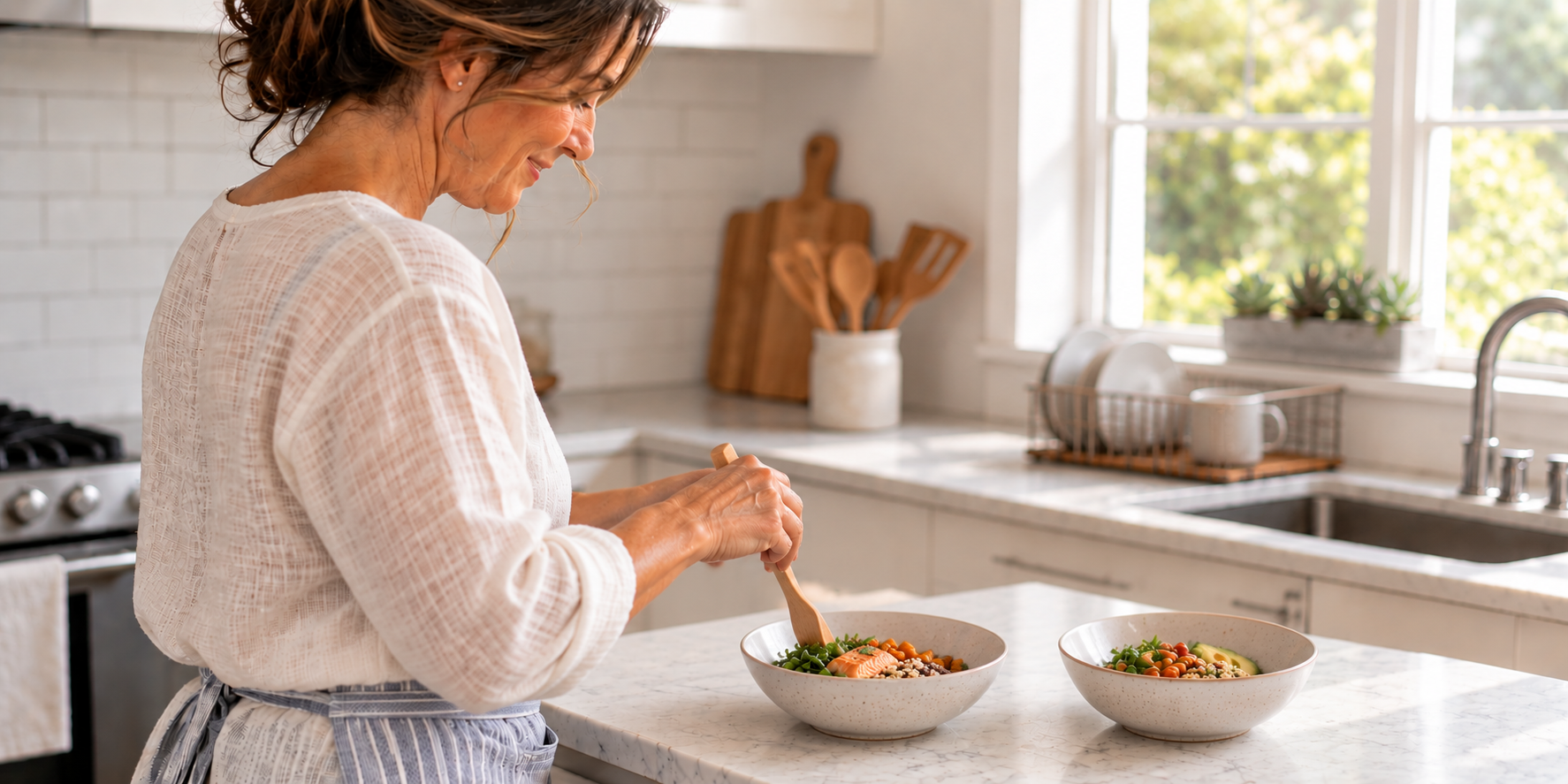
Protein, fermentable fiber, and unsaturated fats aren't just "healthy eating" advice—they're among the strongest natural triggers for your body's own GLP-1 release. Protein-forward meals, fiber from beans, lentils, oats, and vegetables, and healthy fats like olive oil, nuts, and fatty fish all support the same signal the medication is supplying from the outside.
However you feel about tapering or dosing, that's a conversation to have with your clinician, not something to decide from a lecture or a blog post (mine included).
None of this diminishes what these medications can do. It just reframes what they're for—less a permanent fix, more an opportunity to change the pattern that needed fixing in the first place.
If you're on a GLP-1 medication and want help using this window well—building the habits that actually stick once the prescription changes—that's exactly the kind of work I do with my clients. Book a free Discovery Call and let's talk about what that could look like for you.
This post is for educational purposes and reflects one scientist's research-based perspective. It isn't medical advice and isn't a substitute for care from your doctor or prescriber. Always talk to your clinician before starting, adjusting, or stopping any medication.