
Can You Reduce Weight Regain After Stopping GLP-1 Medications?
Imagine this.
You've lost 35 pounds. Your clothes fit differently. Your knees hurt less. Your blood sugar has improved. For the first time in years, you feel hopeful about your health.
Then someone asks a simple question: "How long are you planning to stay on the medication?"
Suddenly, another question takes over: What happens if I stop? Am I going to gain all the weight back?
If you've asked yourself that, you're not alone — it's one of the most common concerns people have before starting, or while taking, a GLP-1 medication.
As someone who works in clinical research, I find this conversation fascinating. GLP-1 medications — Ozempic®, Wegovy®, Mounjaro®, Zepbound® — represent one of the most significant advances we've seen in obesity and metabolic medicine in decades. For many people, they've been life-changing. That's worth celebrating.
But the conversation around them often becomes polarized. Some describe them as a miracle that makes lifestyle changes unnecessary. Others dismiss them entirely, insisting willpower alone should be enough. I don't think either view tells the full story. The more interesting question isn't medication or lifestyle — it's how to use this moment to build the healthiest possible future, whichever tools are part of that picture.
What the Research Actually Says
A study published in The BMJ by researchers at the University of Oxford looked at exactly this question: what happens after people stop taking GLP-1 medications?
The headline finding: on average, people who stopped GLP-1 medications regained weight faster than those who completed structured diet and exercise programs.
At first glance, that sounds discouraging. But it doesn't mean everyone regains everything, and it doesn't mean the medications don't work — they consistently produce greater initial weight loss than lifestyle changes alone, which is part of why there's more to regain afterward.
What the study actually highlights is this: medication and lifestyle solve different pieces of the same puzzle. GLP-1s change biology — appetite, fullness, the constant "food noise" many people describe. Lifestyle changes behavior — how you eat, move, sleep, and manage stress. One doesn't replace the other. They're complementary.
The Real Opportunity
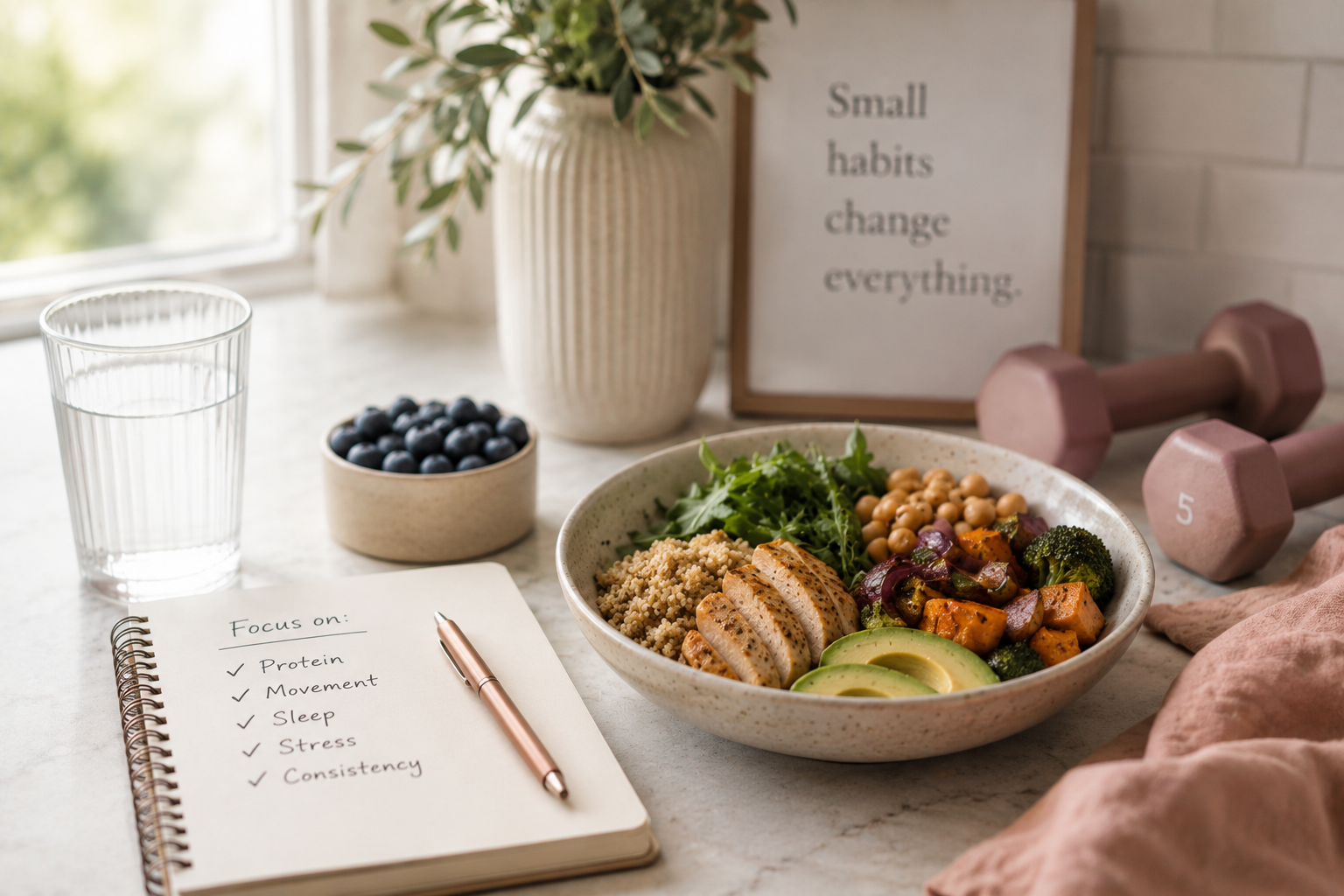
Here's what I find most interesting: for many people, a GLP-1 creates space. When constant hunger and cravings go quiet, there's suddenly more mental and physical energy available — energy that can go toward building the habits that hold up over time. Prioritizing protein. Starting to strength train. Improving sleep. Finding ways to manage stress that don't involve food.
That's the real opportunity — not just losing weight, but using a season where things feel more possible to build something that lasts.
Because whether someone stays on a GLP-1 for years, moves to a lower dose, or eventually stops altogether, those habits go with them. Unlike a prescription, they don't run out.
Weight Loss Isn't the Whole Picture
Imagine two women who each lose 40 pounds. One loses a lot of muscle along with the fat, because she isn't eating enough protein or moving much. The other prioritizes protein, strength trains a couple times a week, and sleeps well.
The scale might show the same number for both. Their bodies — and their futures — won't look the same. One has become lighter. The other has become healthier. That distinction matters more than it might seem, especially heading into the decades ahead.
Where This Leaves Us
So — can you reduce weight regain after stopping a GLP-1? The research is still evolving, and no one can promise a specific outcome. But here's what's already clear: the habits you build now are the one part of this equation entirely within your control, regardless of what future studies confirm.
GLP-1s can be genuinely effective tools. And lifestyle habits keep shaping your health long after any prescription is filled — that part isn't up for debate. This isn't medication versus lifestyle. It's medication plus lifestyle — one addressing biology, the other shaping behavior, and together doing more than either could alone.
People sometimes ask if I'm "for" or "against" GLP-1 medications. My honest answer surprises them: I'm neither. I'm for helping women get healthier, whatever tools are part of that. If a medication helps someone improve her health under a doctor's care, that's wonderful. And the habits — nourishing food, movement, sleep, stress management — don't become less important because a medication exists. If anything, they become more valuable, because they're the part that stays with you no matter what changes next.
That's really the heart of it for me: not a single decision, but the hundreds of small, sustainable choices that build a life you feel strong and steady in — decades from now, not just this season. It's exactly the kind of work I love doing alongside women, whatever their relationship with medication looks like.
— Susanna
Enjoyed this article?
I'll be sharing more practical, science-informed articles about metabolism, energy, sleep, and healthy aging. Check back for new posts — or download my free Metabolism Made Simple guide on my home page to get started with practical steps right away.
The information in this article is intended for educational purposes and should not replace personalized medical advice from your healthcare provider.